
"screen size"
2000 article(s) found

Tanzania Coffee Flavor description Grinding degree roasting degree introduction of Fine Coffee in producing area
Coffee market in Tanzania: coffee exports from Tanzania (Tanzania) play an important role in the entire national economy. In the past, the coffee industry in Tanzania has been dominated by manor cultivation, but now more than 85% are grown by small farmers. Many small farmers form cooperative organizations, the most important of which is the Kilimanjaro Cooperative Alliance (KilimanjaroCoopera)

Every coffee bean needs to be screened, graded and examined.
You should know that 95% of Taiwan's coffee beans come from overseas. During the customs border inspection, the Food and Drug Administration of the Ministry of Health and Fuzhou listed pesticide residues and ochratoxin as coffee bean sampling items. General coffee beans will be graded according to origin, factory height, particle size and so on after processing. Article = Lin Zhengwen every cup of black coffee comes from coffee beans

Fancy Coffee Lovers Gospel Ripple Latte Puller
Many people like fancy coffee, but pulling flowers can be a meticulous job, without systematic training and long-term training, it is difficult to do well. Now, this Ripple latte puller can help you. Ripple latte pull mechanism makes complex patterns in seconds, automatically recognizes the size and height of your cup, and comes with a large size LCD touch screen. You can touch the screen

Coffee beans are processed in two ways.
Aftertheharvest coffee bean processing: coffee pulp must be processed immediately after picking to prevent unsightly meat fermentation and rancidity. Coffee beans are processed in two ways, wet and dry.

Coffee plantations in Angola, screening conditions for coffee beans in Angola
Following Cafe (official Wechat account vdailycom) found that the Beautiful Cafe has opened a small shop of its own to grow and produce Angolan coffee mainly in Kwanza Sul Kwanza Sul, Kwanza Norte Kwanza Norte, Uge Uige Province, and a total of 10 other provinces, such as Cabinda, Huambo, Biye, Benguela and so on. The selection of coffee beans is very strict: the size is one.
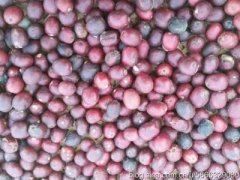
Description of Flavor of Fine Coffee beans in Tanzania A brief introduction to the treatment of taste grinding degree in the producing area
Moderate roasting will give off sweetness and light acidity, deep roasting will produce soft bitterness, suitable for blending coffee types: medium concentration coffee description: refreshing acidity and medium mellow complement blackcurrant and mandarin orange flavors processing method: washing method with flavors: blackcurrant, orange and lemon similar coffee: Kenya coffee from Tanzania

Grading of Kenyan boutique coffee beans what do you mean by AA, AB and PB in Kenyan coffee
Coffee is graded when it is still raw before roasting. Any coffee tree can produce all grades of coffee, from E to C, and then sort by size. This is done for consistency in baking, because beans of similar size are baked at a similar rate, while beans of different sizes are baked unevenly (for example, more

Which Kenyan coffee brand should recommend the top beauty with the characteristic flavor of Kenyan aa coffee?
Professional coffee knowledge exchange more coffee bean information please follow the coffee workshop (Wechat official account cafe_style) Front Street-Kenya Coffee grading introduction Kenya is a well-known producer classified by the size of coffee beans. It is usually divided into nine grades, according to the bean type, there are PB, or round beans, accounting for about 10% of the total output, in addition to E (elephant beans), AA, AB, C, T according to size.

What are the common ways to handle raw coffee beans? What is the difference between solarization and washing? Coffee-producing country
Professional coffee knowledge exchange more information about coffee beans Please follow the common handling methods of raw coffee beans in the coffee workshop (Wechat official account cafe_style). What is the difference between solarization and washing? What is the grading system of raw beans in large coffee-producing countries? 1. Grading: after the seeds are taken out, the seeds are screened and graded, and Guatemala, Costa Rica and other countries are rated according to the planting height.

Introduction to the method of flavor description and taste treatment of several seeds in coffee berries
There are several seed treatment methods in coffee berries flavor description taste treatment method after coffee is picked, in order to prevent berries from rotting, the sooner the better. Depending on the climate and environment, coffee beans can be treated in two ways: solarization: an ancient method of coffee treatment, which is still widely used in many countries where water is scarce. It is to put the berries directly in the sun.

Description of the Flavor of Kilimanjaro Coffee in Tanzania introduction to the grinding degree of fine coffee beans in the producing area
Tanzania's main coffee producing area, located at the foot of Mount Kilimanjaro, is rich in volcanic soil. Some coffee trees planted here are more than 100 years old. Coffee was first introduced by Christians from Kenya to grow coffee. Coffee trees must be carefully taken care of, weeded and fertilized. And old branches must be cut off so that new branches can grow to maintain the quality of coffee beans.

Introduction to the characteristics of varieties produced by description and treatment of Grade Flavor of washed Coffee beans
The process of screening the grade of washed coffee beans is to put the coffee beans on the Internet and shake them back and forth by machine or manually, the beans the size of a mesh will fall and be removed, and the beans that have been removed will be screened through a smaller sieve.

Fragrant Tanzanian coffee flavor and taste the characteristics of the manor producing area introduce Kilimanjaro coffee
Usually its acidity is relatively mild, after the entrance, it evenly stimulates the taste buds in the middle and both sides of the back of the tongue, feeling a bit like the sour taste of tomato or soda. After moderate or more moderate baking, it has a strong aroma, then grind it into a fine powder, soak it in a pot of boiling water, and invite friends to sit around and taste it. Coffee is like Tanzania's simplicity, frankness and enthusiasm.

A brief introduction to the planting climate and altitude of varieties in the coffee plantation of Arusha, Tanzania.
Ingredient raw beans: raw beans are unbaked beans, which contain 11.5% fat; 11.5% moisture; 28.6% crude fiber; 4.0% minerals; 6.2% tannic acid; 1.3% caffeine; 17.0% essence; 8.1% sugar; 11.8% protein. Baked beans: baked beans, which contain 13.0% fat; 1.5% caffeine; 29.5% crude fiber; 2.6% moisture; 5 minerals.

Flavor and taste characteristics of coffee manor in Tanzania introduction of Kilimanjaro Coffee Bean
The national emblem of Tanzania was developed in 1964 on the basis of the Tanganyika national emblem. The shield in the center is divided into four parts: the top burning torch cuts through the pre-dawn darkness and lights the flame of freedom and hope; it is painted with the Tanzanian flag; the red ground below is crossed with tomahawks and spears; finally, the waters of the Indian Ocean and the lakes in the territory. Shield

Drying processing of coffee beans after picking
Coffee berries must be processed immediately after picking to prevent pulp fermentation and decay. Coffee beans can be processed in two ways, wet and dry. The drying method is also called the natural method. Spread the coffee berries flat in the sun to dry. In the plantation, 50 square meters of coffee berries are spread on each hectare, or the fruit is dried in a special dryer.

Introduction to the quality of Grinding Manor by describing the characteristics and Flavor of Tanzanian Coffee beans
On January 12, 1964, the Sang people overthrew the sultan and founded the Zanzibar people's Republic. Tanganyika and Zanzibar formed a United Republic on April 26, 1964. On October 29 of the same year, the name of the country was changed to the United Republic of Tanzania. Julius Cambara Ginerere was the founding president and was re-elected twice until he resigned voluntarily in 1985. Mwinyi was elected on October 27th of the same year.
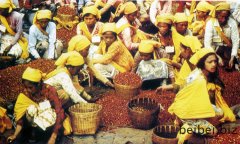
Post-harvest processing of coffee beans
After the harvest coffee bean processing: coffee berries must be processed immediately after picking to prevent pulp fermentation and decay. Coffee beans can be processed in two ways, wet and dry. The drying method is also called the natural method. Spread the coffee berries flat in the sun to dry. In the plantation, 50 square meters of coffee berries are laid on each hectare, or
The concept of Fine Coffee Specialty Coffee (1)
The traditional classification of coffee beans is usually based on the classification criteria defined by the coffee producing countries, and then agreed to become common in the international market and traded under such a tacit understanding. For a long time, coffee producing countries have their own classification and evaluation criteria for coffee, which serve as the pricing guidelines in the coffee market. But slowly in recent years, coffee consuming countries have begun to demand unified evaluation criteria.
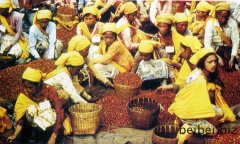
Coffee beans after harvest processing methods Coffee common sense
After the harvest: Coffee berries must be processed immediately after harvest to prevent fermentation and decay of the pulp. Coffee beans are processed in two ways, wet and dry. Drying method drying method is also called natural method. Spread the coffee berries out in the sun to dry. In the plantation, 50 square meters of coffee berries are spread on each hectare, or